
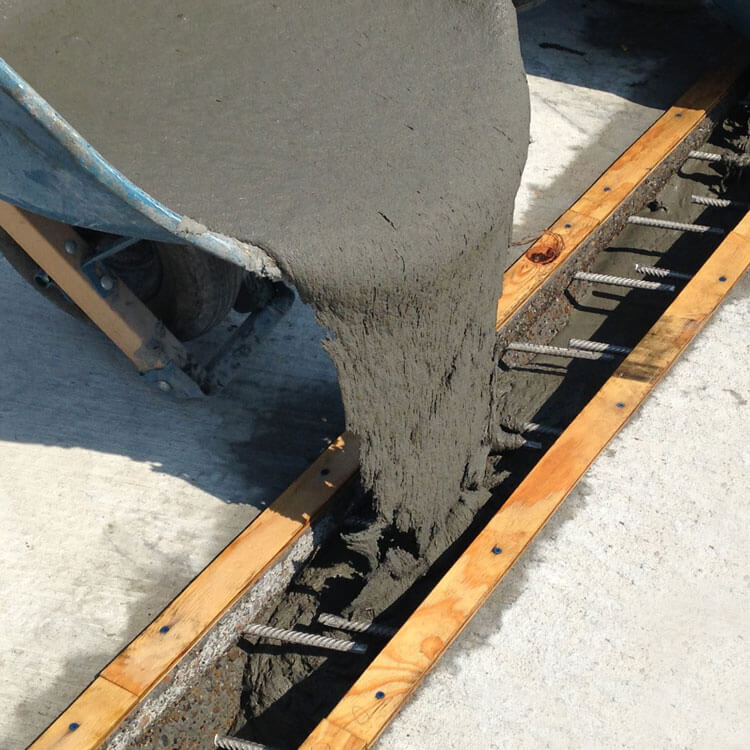
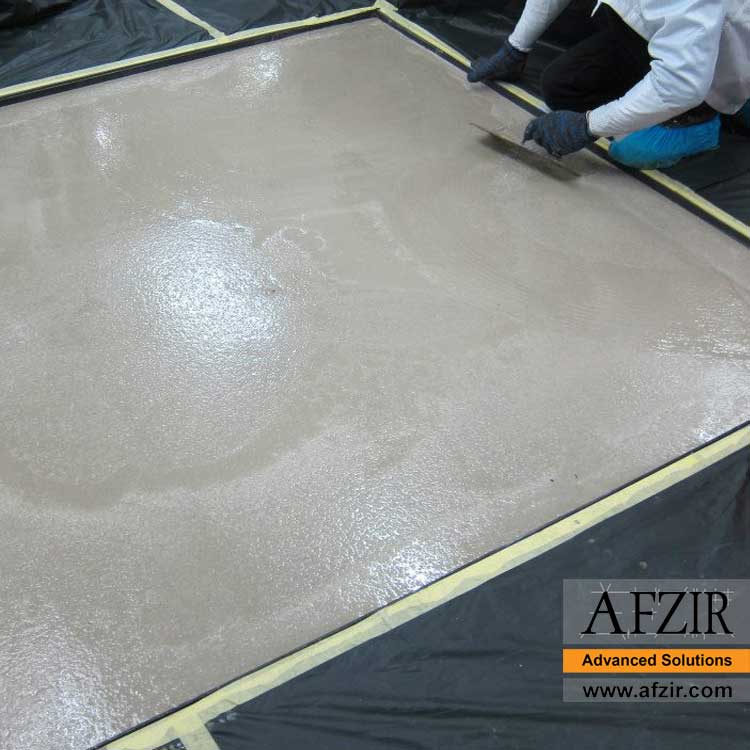
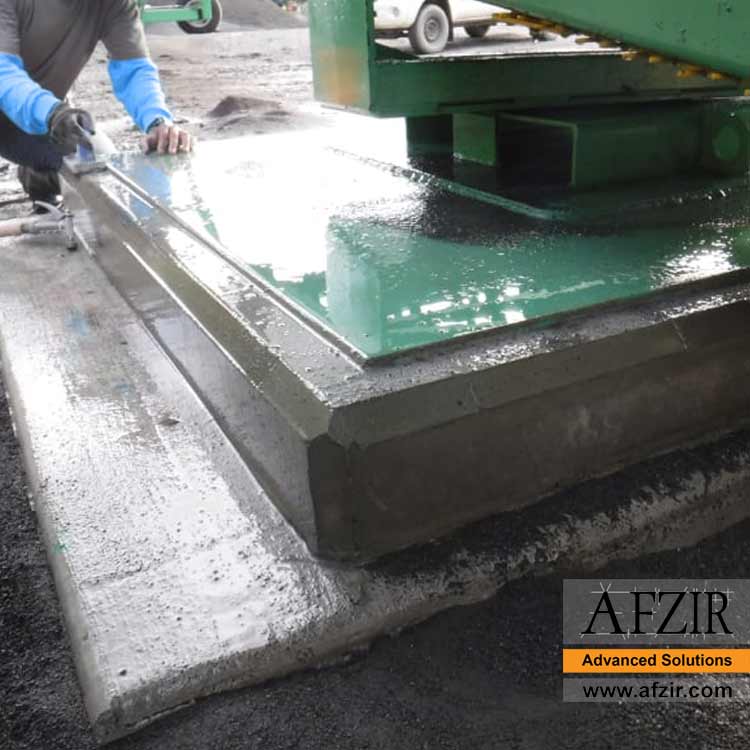

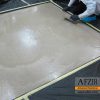
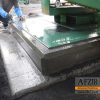
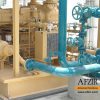
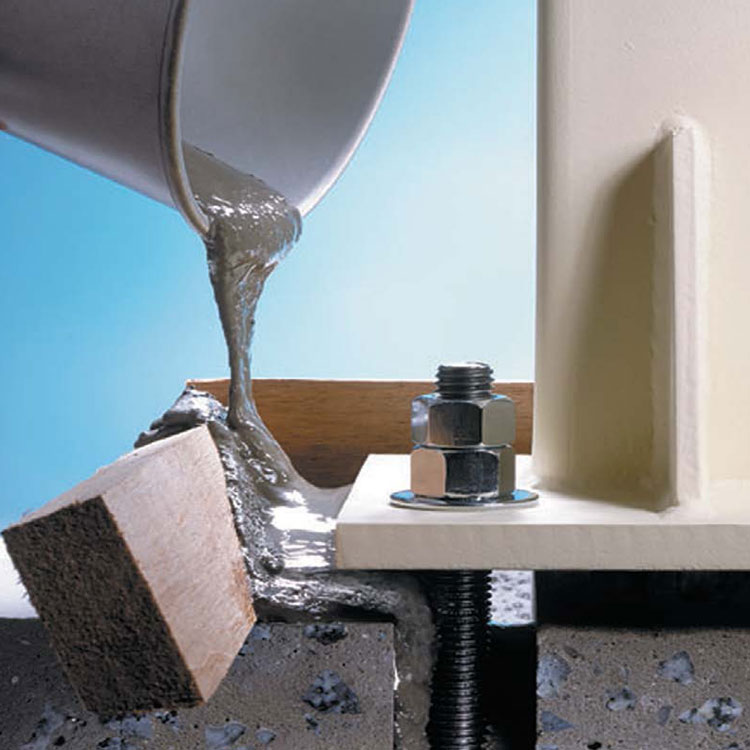
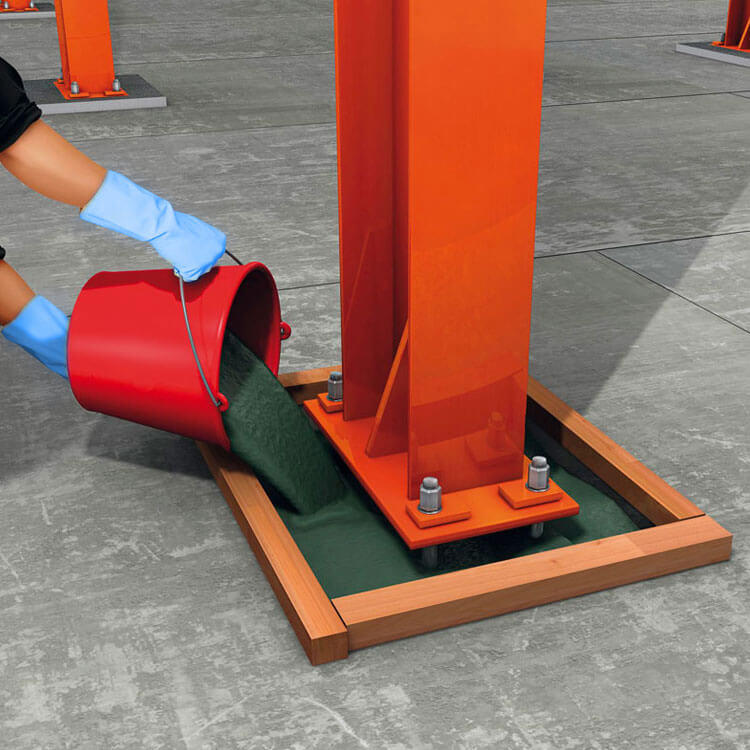
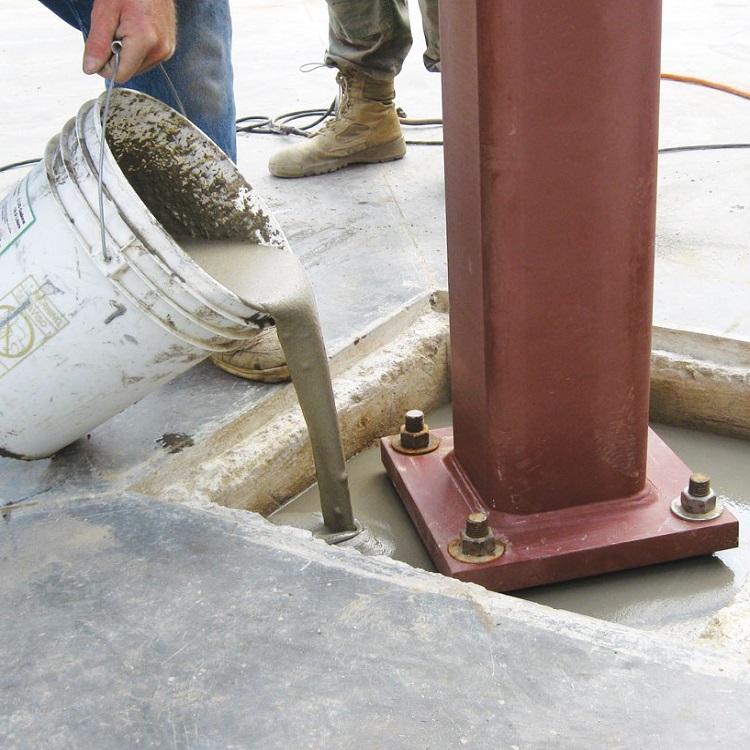
Epoxy grout is a specialized grouting material formulated with a three-component system. When mixed with water, this grout does not shrink or experience volume reduction, making it suitable for various applications such as flooring, rebar planting, and filling cavities beneath base plates. It can also be used to level the surface of base plates. Specifically, ERG™300 is a highly volatile, three-part epoxy grout designed for thicknesses ranging from 1″ (25.4mm) to 8″ (203.2mm).
Securing heavy industrial machinery and crane rails against severe vibration requires maximum compressive and impact resistance. Specifying a high-performance three component epoxy grout ensures complete cavity filling, rapid early strength development, and long-term chemical protection.
Formulated using special epoxy resins and well-graded materials, epoxy grout offers easy grouting in spaces with a 20 to 100 mm width. The following sections will discuss the differences between three-component epoxy grout and cement grout, application methods, properties, features, specifications, and pricing.
WHEN TO USE THREE-COMPONENT EPOXY GROUT
Selecting the appropriate type of epoxy grout depends on the specific requirements of the project at hand. Factors such as environmental conditions, on-site applicability, stability, and durability should be taken into consideration. For instance, gravity grouting is recommended for small base plates, while larger areas and volumes necessitate high flowability and efficiency grouts.
Consider the following points when choosing and applying grout:
- Grouting can be done by gravity or by a pump. Pump grouting ensures a constant and uniform pressure, eliminating air entrapment in the grout.
- Pump grouting allows for achieving maximum resistance with minimal grout thickness. In contrast, gravity grouting requires observing restrictions related to the minimum thickness of the grout, depending on its plastic, liquid, or fluid states.
- Expanding grouts are more suitable in weather conditions where moisture loss is likely.
- Three-component epoxy grout is ideal for high-pressure applications such as wind turbines, gas transmission and crane rail installations, offshore structures, and machine base plate installations exposed to dynamic loading and continuous vibrations from heavy industrial equipment.
- It can be used when installing new equipment, base plates, anchoring, and when the grout is subject to chemical attacks and severe vibration. Its excellent resistance to impact and vibration loading ensures no damage, even under extreme dynamic loads.
THREE-COMPONENT EPOXY GROUT PACKAGING
ERG™300 three-component epoxy grout is available in standard units:
- Part A (resin): 20 kgs and 10 kgs buckets.
- Part B (hardener): 10 kgs and 5 kgs buckets.
- Part A and Part B are supplied in plastic buckets,
while Part C is available in 30 kg and 15 kg bags.
THREE-COMPONENT EPOXY GROUT PRICING
The price of epoxy grout varies per square meter. Factors such as the type of grout execution, materials used, and project size impact the cost. To estimate the total cost, calculate the required amount of grout by measuring the dimensions of the area to be grouted (length, width, and height). Once the volume is determined, the cost per square meter can be calculated based on the chosen grout type.
BENEFITS OF USING THREE-COMPONENT EPOXY GROUT UNDER BASE PLATES
Due to its high efficiency, fluidity, and ability to fill corners and pores, epoxy grout is highly suitable for filling the base of columns. It offers a strong connection and adhesion between the foundation concrete and the column plate or plates. Its rapid setting speed further enhances its effectiveness.
DIFFERENCES BETWEEN EPOXY GROUT AND ORDINARY GROUT
Compared to cement grout, which consists of cement powder, three-component epoxy grout stands out with its unique characteristics. Here are some notable differences between epoxy grout and ordinary grout:
Tensile and Flexural Strength:
Three-component epoxy grout exhibits higher tensile and flexural strength than cement grout. This enhanced strength provides superior resistance to cracking, making it suitable for demanding applications.
Load Tolerance:
Epoxy-based grout demonstrates superior resistance to both dynamic and static loads compared to cement-based grout. This makes it a preferred choice for installations subjected to heavy loads and continuous vibrations.
Connection and Adhesion:
Epoxy grout creates a stronger connection and adhesion between the foundation concrete and the column plate or plates. This ensures enhanced structural stability and durability.
Resistance:
Epoxy grouts are known for their exceptional resistance properties. They offer increased resistance to chemicals, stains, moisture, and abrasion, making them ideal for use in environments where durability is crucial.
Compressive Strength:
Three-component epoxy grout provides optimal compressive strength within a relatively short time frame. It reaches its maximum strength between 24 to 48 hours after grouting, allowing for faster project completion.
Application Time:
Epoxy-based grouting has a faster application time compared to regular grouting. Its quick-setting properties enable efficient installation and minimize project timelines.
Price:
It’s important to note that the cost of three-component epoxy grout can be higher than that of ordinary grout. The increased durability, strength, and specialized properties of epoxy grout contribute to its higher price point.
Considering these differences, three-component epoxy grout is often favored for projects that require enhanced performance, durability, and resistance to various factors such as heavy loads, chemical exposure, and moisture.
In summary, three-component epoxy grout offers superior strength, load tolerance, adhesion, and resistance compared to ordinary grout. Its unique properties make it an excellent choice for demanding applications where durability and performance are paramount.






Reviews
There are no reviews yet.